For me, a big motivator has always been to make my family proud.
I come from a working-class, blue-collar, union, factory-working family. All of us lived in and around a small town for 7 generations and can even trace back our work history to 2 factories located in the same town.
My family has a proud tradition of hard work, sacrifice, generosity, and being genuinely good people. Simple, genuine, and hard-working people.
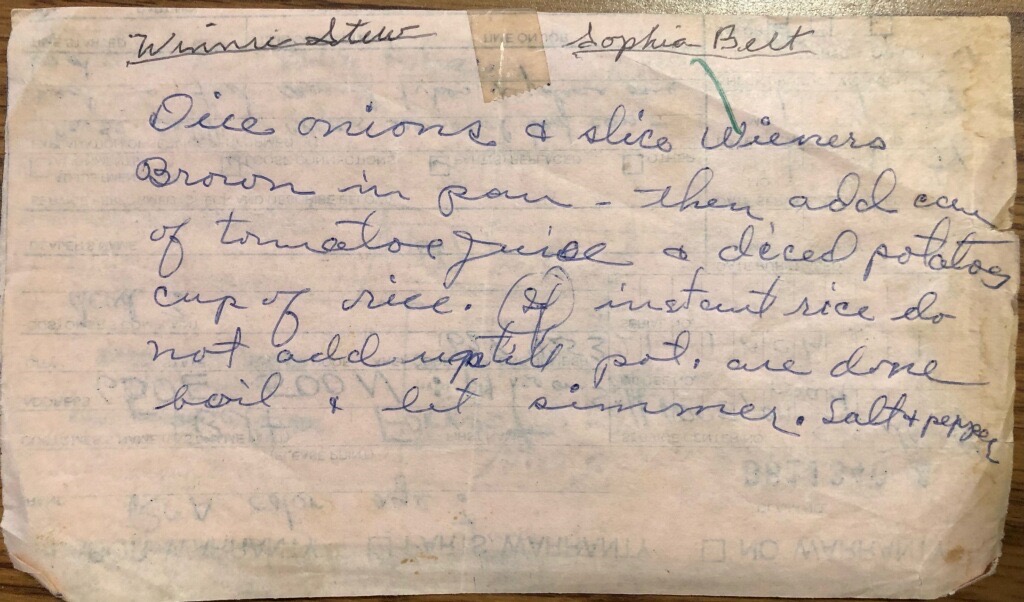
So, each day I am motivated to do my very best to be like them, but truly one person in particular that always comes to mind is my Grandma Sophia. I could say so many things about her to demonstrate her generosity, but today I am sharing this photo.
In this photo is a recipe she made that became the stuff of legend in and around the neighborhood. If you say ‘Winnie Stew’ to any of my family or my Dad’s or Uncle’s friends they will light up and then start sharing stories of how my Grandma Sophia made this for the entire neighborhood and how they have not had it in years. Then the laughs and smiles will continue as they share stories of how they were all showed in and she made this for them while a dozen or so boys all piled into the small living room having fun.
It’s just hotdogs, potatoes, and rice. Simple really, but if you think about it, how could a working-class lady feed dozens of neighborhood kids on a meager budget? Affordable ingredients, simple recipe, and a lot of it, but combined in a massive pot and made with love.
She never knew a stranger and always wanted to make sure everyone was ok, everyone. She looked for chances to help people. Her life and the way she lived it always motivates me and acts like a beacon when I am due for a course correction.
Many companies will say, ‘Work-life balance is important’, but then leave it at that. This is the current buzz phrase to drive you as the worker to shut it down and avoid burnout by thinking of the time away from your family, friends, or personal fun times.
I have yet to hear much talk about the counterweight to this balance for many people, Family.
For workers with families of some kind, this work-life balance has people on the other end of the proverbial teeter-totter. We feel pressure to avoid the last-minute Zoom call to address the latest emergency to pop up where other company members must have you there to solve the problems presented to them now, at that moment.
This is where the balance conversation begins and ends for many. Do you say, just one more Zoom call, just one more time for a swoop in and fix?
One more Zoom call, one more meeting, one more time we stay later at work and delay the time with family and friends we have committed to, gives me the visual of me sitting down low on our end of the teeter-totter and them on the high side, feet dangling, wanting to get down and do something else fun.
Wow, this looks fun ^^^ HA!
Or, do you set boundaries with your co-workers by making your effort to have a balance between work and your life, or in this case the family that is dangling atop the teeter-totter asking to be let down?
Queue the fear-based thinking…
What if my co-workers think I am not committed?
What if my boss does?
Will I be looked at as a slacker?
Will this keep me from being promoted?
If the company you work for is evangelizing a better work-life balance then use that as an opportunity to be more organized with your day and show discipline around what you allow your time to be used for. Time management, organization around the core outcomes each day, and discipline. It always comes down to that in my experience. Fear and anxiety come from a lack of preparation.
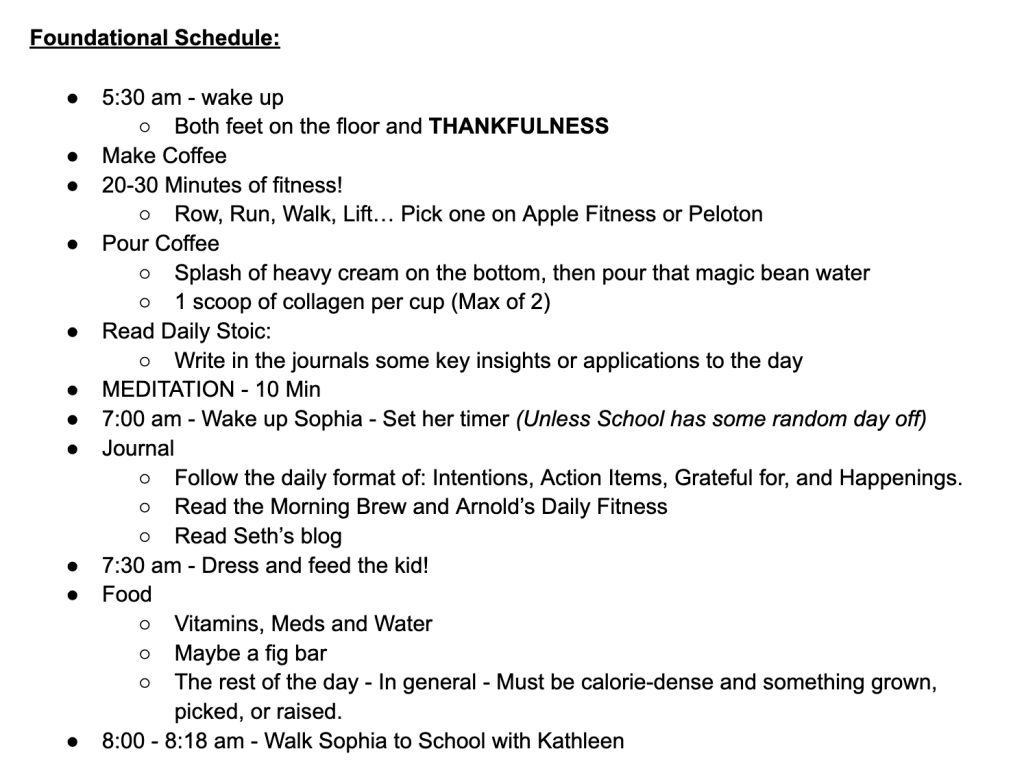
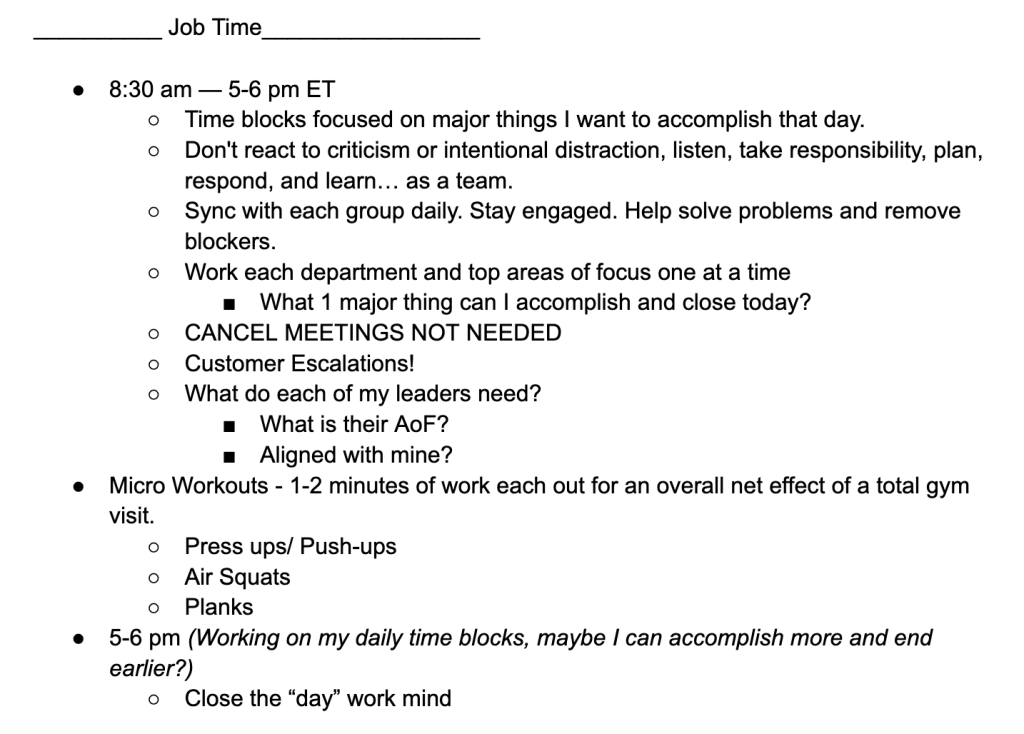
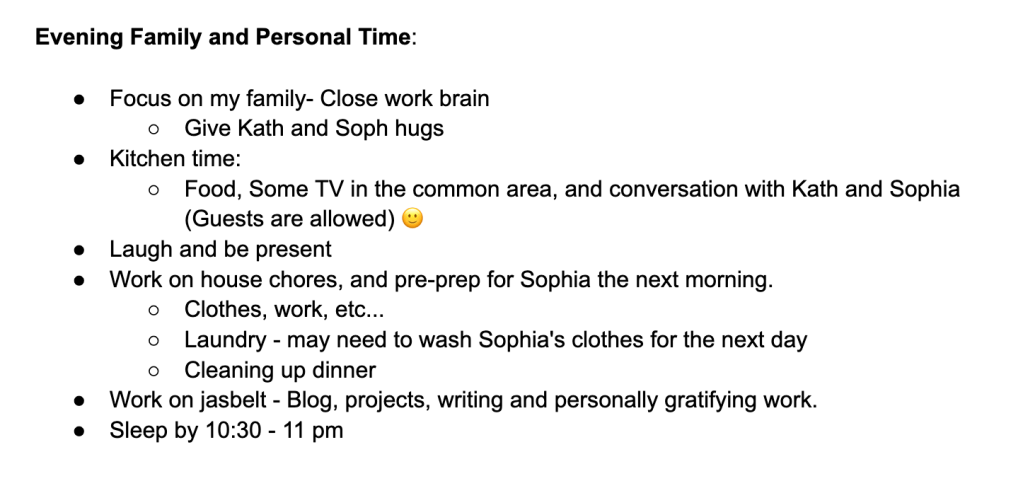
What has worked for me 90% of the time is a simple exercise called the ideal day. You sit down with a sheet of paper or a note-taking app on a device and then write down the key things you want to do each day in milestones. Then you review and assign timeblocks to these. You will have personal things and work things. Typically for people who work during the day your personal time will start in the AM, followed by some family time for school prep, etc, and then work time, followed by more personal time or family time.
This is where that balance is visually seen. How many hours for work are placed where in this ideal day is all up to you, but in this case you now have a visual to refer to when assessing the balance.
Pasted my current foundational schedule below. Hope it helps!
In my current role, there are true emergencies that I must respond to that relate to life safety and as a team, we are working through some major lifts and shifts to improve the organization as a whole. These push the teeter-totter down in my direction more so at times. My family understands this about my current role and how I bring in money for the family that we all use to achieve personal goals. Also, they know how much these professional challenges mean to me when it comes to goals and personal growth for me and my teammates. I am thankful for their support and love each day as I leave the ‘office’ and get hugs and happy times. In the case of the photo below, a heart-shaped doughnut on a Sunday as I was working!
The was a great doughnut and an even better memory…
In the post about having Discipline in Chaos, I referenced that we should “Trash the ego”. Let’s unpack what I meant by that.
Having discipline in chaos, and the actual level of noise created by the chaos oftentimes brings out the worst of us. The demands and pressure hitting our brains can trigger the “fight or flight response” which is a survival instinct based upon fear. It is an animal instinct conditioned over 1000s of years. Knowing that, I often refer to these instincts as “animals” in my brain.
Another animal is wanting to let loose inside our brains and it often finds its tastiest treats during times of stress.
Ego.
In my experience, when I am under stress, fear of failure creeps in as the volume of demands mounts, then as this thinking is present, my ego starts to feed off of this thinking. This fear of failure is real, but it is what the fear is based on that I try to control.
I will look bad if I fail. I will be seen as a failure. I will be seen as not capable. I will lose the trust of my leaders that believe in me.
Notice the trend in those thoughts?
“I”
This fear of failure or losing status is all ego-driven. Sure, failing at anything is painful, but in my brain… Which is noisy… That failure is purely subjective given I also have a powerful mental driver inside called perfection. Wow, my brain is so noisy, I need a list…
Fear
Failure
Ego
Perfection
So, looking at this list I can see one commonality: perception.
Perception refers to the process through which individuals interpret and make sense of sensory information from the environment. So, in this perception exercise, my brain senses inputs from what is going on and then tells me a story, and then with the above 4 “animals” lurking inside, my brain is often skewed in its perception of what is actually happening.
Ok, that is a lot to process and can be raw. What do I do in these times of stress when the animals lurking in my brain are running wild?
I take a breath and check reality.
I admit that this stress is my fault given I made the choice to work, do, play, or challenge myself with this ‘thing’.
I read books/blogs/watch videos by smarter people centered around the problem(s)
I admit that my perception is skewed by the 4 animals above and that my desire for perfection, not “failing” and not being viewed as a person that lacks capability is driving this reaction.
I make a list of progress: What has my team accomplished?
Then, I focus on the teams’ growth…
That ends up in me breathing and realizing that my team is growing and that my fear is all about me and I refocus on them.
Then, as I discussed in the post “Discipline in Chaos” I get back to focusing on progress over perfection.
There is a concept in Buddhism called the taming of the monkey mind. If I could characterize the 4 animals above into one, it would be that crazy monkey at the zoo all of us have seen that is screaming, throwing poop, and just wants anyone to pay attention to his story. I have been practicing meditation for a few years and overall what it helps me do is see through this fear/ego spiral and get back to reality.
As a high achiever personality, I will always fight this (I/D on the DISC – woot!). As the years roll by, and I listen to mentors in person or through resources like books, blogs, and podcasts, I have grown thankful for this animal in my brain. Through the pain of taming this monkey, I find a better version of myself. Doing hard things is a choice and so is trashing the ego, listening to smart people, and seeing the world around you for what it REALLY is.
Ripe with opportunities, lessons to learn, and people to share these lessons with each day.
Now I feel like I need to pick a name for this monkey in my brain… perhaps… I will think about that and see what he tries to tell me the next time the heat is on and what that message tells me about myself.
I am a big fan of how Seth Godin’s brain works. He takes the complex and boils that down into simple word pictures to help the masses get it.
This is one of his blog posts and it paints a vivid picture: Kash’s Garden
I have taken a 6-month break from writing as I have been chewing on my current role and what could be the most challenging time of my professional career. The challenge has been a good one, so much growth and for that, I am very grateful.
Garden at Vétheuil by Claude Monet
Seth’s blog post really paints a vivid picture of what my team is working to change over the last few months. The conditions a leader creates for their people to succeed really do set the stage for growth and success, but then there is the largest contributor: “None of it happens if the plants don’t do the thing they want to do in the first place.”
So, it’s a combination of the leader’s ability to set the right conditions for the RIGHT plants to grow. Having the right plants in the garden for the conditions makes all the difference between having a mediocre garden or one that flourishes due to the conditions and the plants working together completely.
Are you setting the right conditions with clear outcomes in mind?
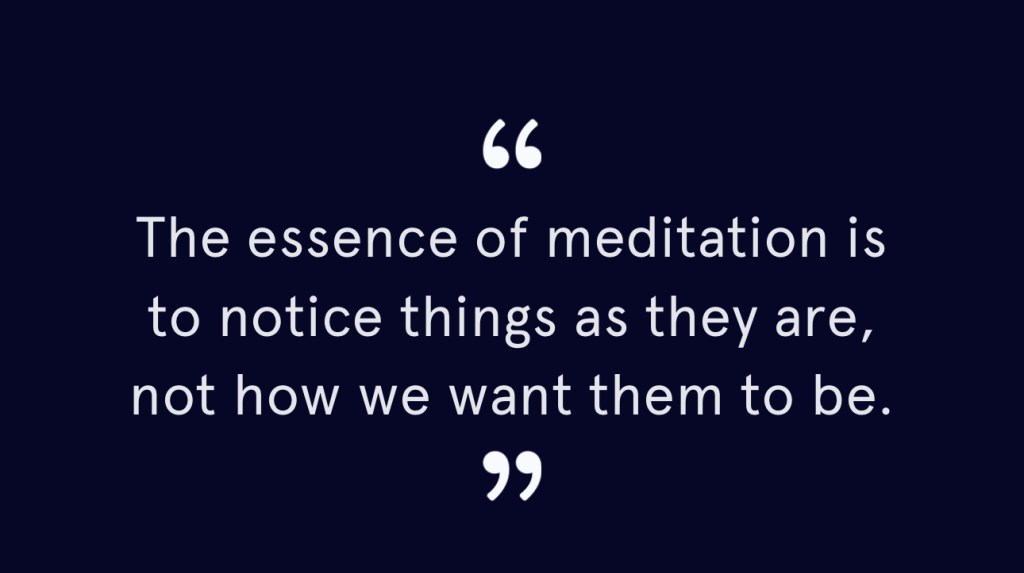
“It is impossible for certainty and curiosity to exist in the same moment”
This statement made as part of the meditation lesson via Headspace one morning last week made me pause.
Do I stress out trying to manage toward a level of certainty and as a result, close my mind to learning new things?
Part of why I practice meditation is to learn new things about my brain. As I have “matured” over the years I clearly recognize I have mental strengths and those strengths are paired with definite weaknesses. Meditation has helped me be open to my weaknesses and through mindfulness learn and practice better managing those on a daily basis.
I love routines, habits, and predictability, which when considering the statement above I am attempting to walk a path toward some sort of certainty. Perhaps I have this skewed? Am I using my habits ina n attempt to gain more certainty each day? Do I form habits with the aim to settle on a repeatable routine and stick to it?
Patrick Lencioni is a believer and teacher of the principle of clarity over certainty. In his view, leaders need to strive for clarity and make decisions vs striving for certainty, or being “right” and then making a decision that in their mind is certain to succeed. The latter in his mind is impossible and will lead to paralysis. People and organizations learn more from clarity-based decisions and the only cost for the leaders operating this way is pride, but in the end, clear information at hand was used to make the best decision possible and the lessons learned can be used to iterate and improve.
So, connecting the desire for certainty, to pride is a powerful one. Perhaps my ego, constant desire to be right, or limit failure, actually limits my learning? I do know this to be true and have actively worked at limiting my ego over time. Fear and ego connected to pride, are powerful forces that can paralyze us and I can see the connection between certainly and the fear/ego trap.
So, as a leader, my lesson learned here is basic but hard to practice given my lower instincts as a human. As I meditate and learn, I will work to focus on the pursuit of clear information to make the best decisions possible with my team. This pursuit of clear information will fuel curiosity and as we find more information in this pursuit of clarity, then make decisions, and learn more, then the more curious we will get. That is a positive feedback loop and one I am excited to continue.
I try to practice this each day with my teams, but candidly, the fear and ego feedback loop when things go wrong is a powerful one.
‘How can we ensure something like this never happens again?’
I hear that pinging in my head and the honest response would be: ‘We can’t’
The pressure in business is to offer assurances that lessons learned would make it so what transpired will ‘never’ happen again. The truth is, that in a day when we have tech stacks consisting of dozens of separate, but integrated solutions, designed by people, managed by people, updated by other people, and then tracked with software designed by other humans, breaks and mistakes leading to problems are going to always happen.
So, as a leader dealing with an issue, I can either look to provide certainty to a client and my team or I can lead the charge for curiosity and gain clarity with my team to make a better solution for the client.
I am going to work each day to pursue clarity and coach my team to be curious in our continuous pursuit to be better.
What are you going to do? Are you going to try to be certain before deciding/leading, or are you going to be curious and look for clarity, make a decision, and then embrace the lessons learned?
The first things I lose when there is chaos are discipline and organization. Inputs and asks come from all directions and I feel the pressure to act in response as the requests keep coming and then I keep reacting.
This behavior on my part gives the power over my organization to those external to it, requesting things from me, and so they drive the agenda.
First: External requests from other departments in a business are vital as a business is a team and these teammates are not requesting things at random or based on a feeling that just pops into their heads. There is some sort of trigger causing the request.
Second: Responding to those requests is equally vital as oftentimes these requests are client driven as well. Clients = revenue and revenue = life of the business.
How do I keep myself from losing discipline and organization when external factors drive more and more volume?
Sometimes I don’t. I am human and I want to do a good job and I want others to think I am doing a good job, so I do give in to the pressure to respond immediately. I hover over my email, and Teams, and or start obsessing over the “queue” of tasks coming from all sides.
Until I don’t anymore when the chaos becomes measurable by my lack of macro results and increase in stress responses.
So, when I finally pull out of the input and response tailspin…
Here are a few of the things that help keep me organized and making progress on the macro while fielding the micro day-to-day business demands.
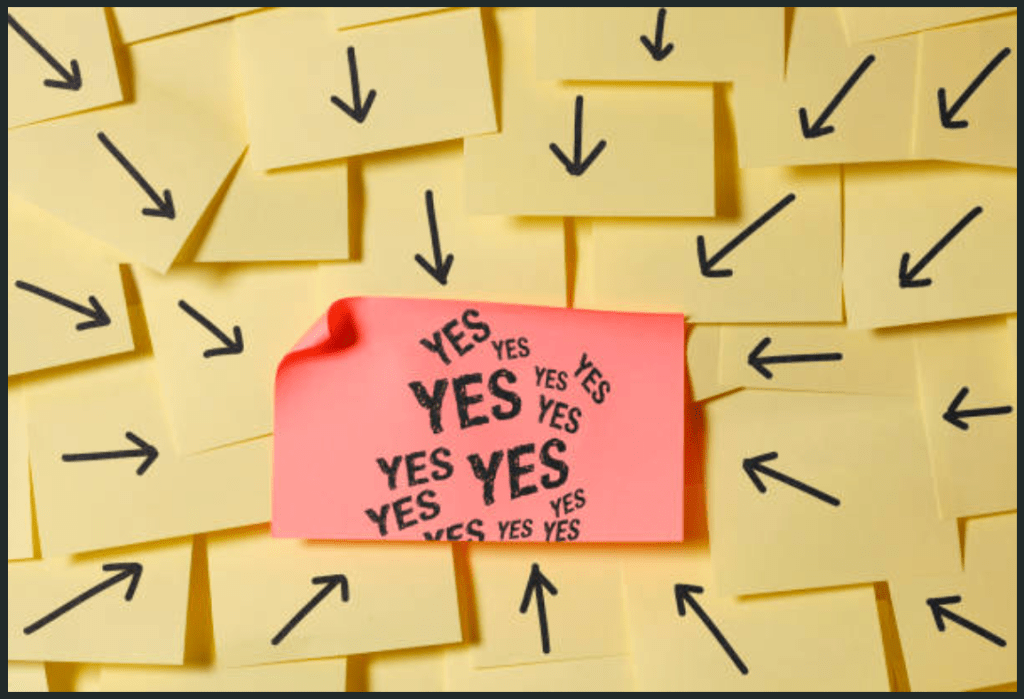
I write things down on a physical post it and stick it on my desk…
if it is something that popped up and is not connected to a larger aim or project then it is something I cannot manage in our tools.
When the task is accounted for, I wad it up and try to make a basket from my chair into the trash can… feels good!
Use a collaborative note-taking app like OneNote, Notion, Evernote…
Place my team in it
Make note “buckets” that include daily, weekly, monthly, etc.. org subjects
Write about the items as we move and refer to the notes as a form of records and documentation related to decisions
Rely on the shared notes to bolster communication, collaboration, and transparency
Build an ongoing project management habit using a shared PM tool.
This tool has a record of each macro change being tackled.
The owner of the change can collaborate with others
Share work products and or documents
Updates and due dates can be tracked
Outcomes are measured by completed items
Constantly ask “Why”
When micro inputs hit the team, ask why are these groups asking?
Do we have a problem someplace warranting the ask?
Do we have a management system or process broken someplace?
Is someone struggling to keep up with their job?
Asking questions and then applying the lessons learned is crucial to making progress.
(BONUS) – external asks.. often indicate future changes.. so it is free advice from others that can be used to improve.. trash the ego and listen.
Progress over perfection is a mantra I say to myself when the heat is on and we are driving major change within the organization. Mistakes are great ways to learn, log, and make lasting changes.
So, when the micro inputs of day-to-day business pick up and I am tempted to lose sight of discipline and then my organizational habits… I focus on the above list and get back to those operating norms. In the end, the external teams within the org want to see progress and will appreciate transparency around lessons learned during your teams’ journey and you should ask about theirs too. The business is an organism made up of different people, processes, and technology demands, with a shared fate.
I am a planner. I am a person that lives in a cycle of thinking about how bad things could go, then planning backward to prevent it. Maybe catastrophizing? I am a person that loves to account for things and build flow charts that show how those things work together, and all of the possible outcomes. I am a person that has a brain constantly thinking about what’s next. I am a person that can think on my feet and perform at the moment due to all of this brain processing power spent on what might come to be.
This has been a borderline superpower for me. I lean on it every day.
It was in my 30s that I started to see how much this was actually taking away from enjoying the moment.
‘Be in the moment.’
‘How does that even work?’
This was me questioning the article about meditation I was reading at the time. I was in my Mid-30s and dealing with some work-related stress and the anxiety that had been building because of it over time. In this article, the concept of rumination was broached and I had never considered the connection between long-term thinking and when this dwelling on what might happen in the future became rumination. Rumination leading to some anxiety was my main issue as I took on larger roles in my career. The larger the role, the more people, processes, and technology problems I faced.
Being in the moment was a challenge given my natural tendency to move on in my mind to what is next and process and plan the future asap. I found myself getting sucked into this mental trap of trying to forecast all of the possible issues that might occur next, and it became increasingly hard for me to do a few things:
Focusing on the task at hand.
Keep my brain from being stuck in ‘what if’ mode. What if someone does this or what if this happens?
Feeling like I could disconnect from my work and be with my family.
Having trouble focusing on the task in the moment as I was constantly playing the what-if game trying to maintain my ability to stay ahead just sucked my brain into a vortex that almost consumed me.
How did I make it stop?
Well, after a pretty sharp bout of anxiety… Cue JB laying on his back, on the couch, looking at the ceiling, and taking deep breaths. I gave myself some space and read a few articles and then a couple of books. I worked my way backward, as I describe above, when I felt like I understood enough about the feelings and outcomes I was dealing with, I made some action steps.
Action Steps:
Intentional focus on each day by making a short list of tasks I needed to “be in the moment”.
Find a place to work on and learn to be in the moment vs ruminating.
Each day, take a step back and write down the wins and make the “in the moment” list for tomorrow.
This simple process really helped me at the time. Helped me focus and get out of my own head and in the moments that mattered. This helped me focus on things as they are now, and now worry that they were not like I wanted them to be. Also, I had a mechanism to remind me to celebrate accomplishments. I was missing that in my career as I was solely focused on the next challenge after checking off the current box. Finding this as a way to incrementally make progress, note the wins, and see that I was moving to where I wanted to be was a breakthrough.
For the place to learn and work on being in the moment, and chose the app Headspace to help me learn and then practice this new skill of mindfulness and specifically being in the moment. This app has been a big part of changing my mental makeup and ability to process stress and anxiety, and being better at the moment-by-moment focus and appreciation I feel each day. The app breaks down each day into a series of optional tasks that take you on a journey in learning meditation as a tool or practice as the “pros” refer to it.
Coming from my 30s and now into my 40s… this decision to embrace mindfulness and learn about how the brain processes stress, the moment, and what I can do to be better at truly living in the moments changed the course of my career and life overall. I wish you the best on your journey and hope each moment is a treasure trove of smiles, wins, and lessons learned.
As a leader, I have often asked my teams that very question.
Why am I so afraid of bad news?
How can I ask that same question to myself, that I ask my teams? Well, I am a human, and we are messy. Right?
Fear of bad news is normal, but there is something connected to it that is truly the root of why we are afraid of bad news popping up. It is not the bad news we are worried about, or speaking for myself, it is the way we will look when the bad news is broadcast.
In those moments, my ego is making this fear grow in my mind. Ego and fear.
There is a classic Sci-Fi book written by Frank Herbert called Dune. It is one of my favorites and a passion that I shared with my Grandfather. He and I loved the story and more so we loved the way Herbert spoke about human nature. One lesson, in particular, I always took to heart.
Fear is the mind-killer.
This particular phrase is part of a larger quote called The Litany Against Fear. Here it is from the book;
“I must not fear.
Fear is the mind-killer.
Fear is the little-death that brings total obliteration.
I will face my fear.
I will permit it to pass over me and through me.
And when it has gone past, I will turn the inner eye to see its path.
Where the fear has gone there will be nothing. Only I will remain.”
To face off with a massive sandworm on Arrakis, you had better master your fear…
To explain the context of that image and origin of this selection of writing in Dune, the Book by Herbert would truly pull anyone reading this into the depths of pure Sci-Fi nerdom that I am unsure of your interest or stamina to endure, but I do encourage you to read the book. It is one of my favorites. The movies are pretty good too!
Anyway, fear IS the mind-killer. This is so true and frankly, fear that is linked to our ego is a double killer. In the case of bad news, I believe this is the true root cause of why many of us fear bad news rearing its head in our day to day.
“What will my boss think of me if they see these numbers?”
“Will they think I am a bad leader?”
“On man, am I going to be looked at as a failure?”
“What will my team think of me if they know how bad this deal went?”
Fear and ego can take our brains to the depths of self-doubt, but even worse, we start wasting time telling stories about what others think of us, and in the end, these are probably not true. If they indeed prove to be true, the bad news is our responsibility to deliver and deal with it in a way that adds value and solves the problem.
Everyone is afraid at times. What I decide in these moments always revolves around changing my mental narrative. As soon as my brain chooses the soundtrack of “What does this bad news say about me and my value..” I make myself click to the next track and as I always try to have the, “I solve problems and learn more from failure than I do from winning all the time” track queued up. Also, I love to immediately play the track of “If I’m not failing, then I am not trying anything new or hard enough..” track. That one always gets me focused on reality.
Reality Check: Bad news comes from failure, and failure is the by-product of doing hard things.
I choose to keep doing hard things, so I am going to fail, and thus get bad news from time to time.
The bad news is the presentation of a problem that I need to solve, thus a hard thing to tackle.
Fear is the mind-killer. Our ego can be the accelerant.
Let’s all keep pushing ourselves. Let’s look at the bad news that comes with failing at hard things for what it truly is: A signal that we are doing what we are supposed to do and the bad news is the beacon showing us where we need to focus.
Seth is challenging us in this short post regarding: making a list of things we don’t want to look at. Many of us find comfort in avoiding any thought about these things.
As I have shared before, I love reading Seth’s Blog. In this post, Seth is challenging all of us to look at the things we normally try to avoid. He even goes as far as the idea of making a list of all the things we do not want to look at due to how frightening that list might be.
As a leader, I have felt this to my core. “Oh man, I wonder what our performance was on X metric last week” or “How bad was the final margin on that large project that just seemed to never normalize?”
I love the attitude Seth is bringing in this short post. Over the last few years, I have truly taken the stance of wanting to see the bad stuff quickly and making the data open and transparent to all on my team.
I have the pleasure of working with a company where we meet each week as an Operations team with the COO asking questions and all teams participating in an honest attempt to be transparent with one another. We talk about the bad stuff. We share, we listen, we laugh, we sigh, and more importantly, we are together looking at the things some people in other organizations are afraid to show to a large group for fear of embarrassment, punishment, or even vulnerability.
I look forward to this meeting each week for 2 reasons:
As a newer person on the team, it was the quickest way to learn what was broken and how my role and team could impact the other teams positively and negatively.
I love the conversations around the things that are “bad” or broken that we need to fix as this is a great opportunity for team growth, but also for rapid personal and professional growth.
As our COO says each meeting, we are seeing the relationships in the data and getting to the core understanding of how the business is working. We are addressing the hard stuff and making it better for the long term.
So, to Seth’s point, we are making lists of the things that normally would scare us, but in truth, once you get past the initial fear, the reality is so much better than the unknown. We can make reality better. We can influence the impact the scary things might have on the business. If we avoid them, then it is always hanging there with the impact unknown, lurking in the “shadows”. Averting your eyes only distracts from the chance to make an impact and the opportunities that bringing a team together and tackling something hard together offers.
I love the list of scary things and then seeing our teams cross them off one by one. Averting my eyes used to be something I was tempted by, but I see the value in looking at the scary things first and shining a light on them with my team.
What about you?
Does your organization make a list of scary things and tackle them together?
For the last 10 years, I have been entering organizations with the goal of simplifying operations. Usually, the place I start is looking to find out what winning looks like in the numbers.
The Numbers…
The Metrics…
Data?
Ok, so not that Data 😉
Yes, from my perspective data is always the best place to start, but maybe not in the way you might be assuming.
When entering an org for the first time, I first ask for the most important data points or metrics for the business. Then ask, “What does good look like in these metrics?” I review the metrics and “see what I see” when comparing the metrics provided to this product or service’s typical KPIs.
Compared to industry peers and norms, do this organization’s numbers measure up?
How much space is there between the leaders and those that are lagging behind?
How are the people in this organization using the metrics to gain insight and direction into the improvements that need to be made?
How does the key clientele view the metrics and are they being shared during client meetings?
What relationships do they see in the data?
I have entered organizations that have reported the correct metrics, but did not understand the “why”. I have been a part of groups that knew why they reported the metrics but did not clearly know “what” to do with the data. Then the “how” to make changes with the what and why the data is being pulled also is a common problem.
I am no Peter Drucker, and you don’t have to be either to start simplifying the data, begin making connections between the data and what needs to happen next as an organization to improve, then make some simple processes to ensure the improvements stick.
In my experience, performance improvement starts with the front-line leaders and their understanding of the relationships between the data, processes, and performance.
So, I would start there. Being that I am no Peter Drucker, boiling this work into simple bullets that foster collaborative change works best for me. Here is a simple step-by-step list that may help to gain some initial traction when working with front-line leaders on building understanding….
Find 2 – 3 key metrics that clearly show the outcome of the business process that drives the key product or service.
Start having the front-line leaders report on these metrics each week.
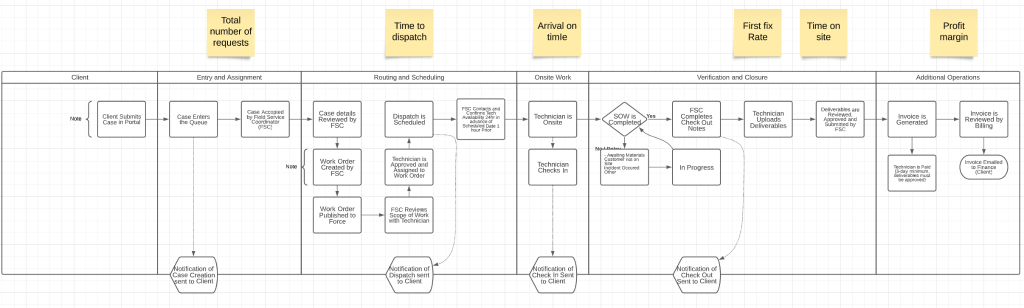
After 1 month of reporting, observation, and discussion around the metrics, help them make a simple process flow chart focussed on this particular business process.
Using the simple process flow, Call out the 2 – 3 metrics in the process and show how they impact the overall business.
Show the relationship in the process flow between performing well in this metric vs performing poorly and how the impact cascades throughout the process flow.
(Note) use specific/real examples of how the metric has impacted the business along the process flow.
Discuss and then write down new process changes on a second flow chart that would directly improve the key metrics, and as a result, improve the process and ultimately the business performance.
Make a simple process document to pair with the updated process flow.
Coach the front-line leaders on how to train the people on the new process using the new documentation.
Go live.
Measure those changes.
Discuss the performance of the changes week over week.
Very important to keep discussing the relationships between the metrics and people’s performance.
Tweak.
Repeat the above as lessons are learned.
As I said, I try to always make things as simple as I can. Two reasons drive me in doing this.
If a process or practice is simple, people are more likely to actually use it and then stick with it. So, improvements continue.
Most of the time, simple processes are easier to understand, also shorter, and therefore faster to do.
So, simple processes based on key metrics drive lasting improvement when the front-line leaders participate in making them, calling on their understanding of the relationships between what the data is telling them, and why they should change.
The fun part comes as you work together on how the changes presented will actually happen and map out the new processes together.












 Jason A. Belt